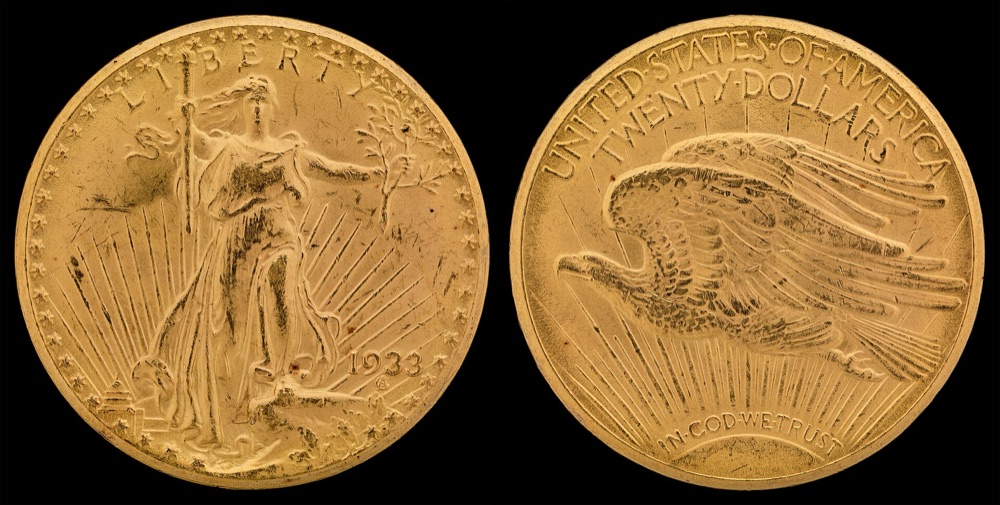
1933 Saint-Gaudens Double Eagle
- Maker
- U.S. Mint (Philadelphia)
- Year
- 1933
- Rank
- 1 of 100
1933 Saint-Gaudens Double Eagle
1933 Saint-Gaudens Double Eagle by U.S. Mint (Philadelphia) (1933) is ranked 1 in the FLOAT 100 for Coins. It sold for $18,872,250 on 8 June 2021. The most valuable coin ever sold at auction and the single most famous rarity in numismatics — nearly the entire mintage was melted before release.
What is it, and why is it in the FLOAT 100?
The most valuable coin ever sold at auction and the single most famous rarity in numismatics — nearly the entire mintage was melted before release.
$20 gold double eagle, no mintmark, PCGS MS65 (the only example legal to privately own; Weitzman specimen)
What is the best-sourced number for it?
- Figure
- $18,872,250
- Kind
- Realized at auction
- Date
- 8 June 2021
Sotheby's, New York, June 8 2021. The sole privately-ownable 1933 Double Eagle (Stuart Weitzman specimen), graded PCGS MS65, realized $18,872,250 — the world record for any coin.
This is a realized sale. Somebody paid it. Source.
How this is made
- The figure
- One reference price, taken from a named public source and shown with its own kind. FLOAT does not average it with anything or adjust it for time.
- Realized or not
- A realized price is a completed sale. A market asking price and a price-guide value are not sales, and are labeled as such wherever they appear.
- Why no grade ladder
- Most FLOAT 100 entries are individual objects. There is one of this, so there is no population and no spread across grades to show.
- Archive
- 2026-08-08